
Key Takeaways
- Surveillance records activity, while monitoring adds active oversight and response.
- Recorded footage helps document incidents and support later investigations.
- Remote monitoring lets trained personnel review important events off-site.
- Alerts help focus attention without watching every camera feed continuously.
- Surveillance and monitoring work best when tied to clear response procedures.
While these two terms are closely connected and often used interchangeably, they do not mean the same thing. Surveillance gives you visibility into what is happening around your property and creates footage you can review later. Monitoring adds active oversight, allowing someone to assess defined events and follow an established response process when attention is needed.
That distinction matters when you are planning a video surveillance installation in NYC. A system designed only to capture footage serves a different purpose from one built to support real-time oversight and intervention. At ADR Security, we help property owners determine how much visibility, oversight, and intervention their site actually requires. Understanding the difference between surveillance and monitoring makes it easier to decide whether you need reliable documentation, live awareness, active response, or a combination of all three.
What is video monitoring?

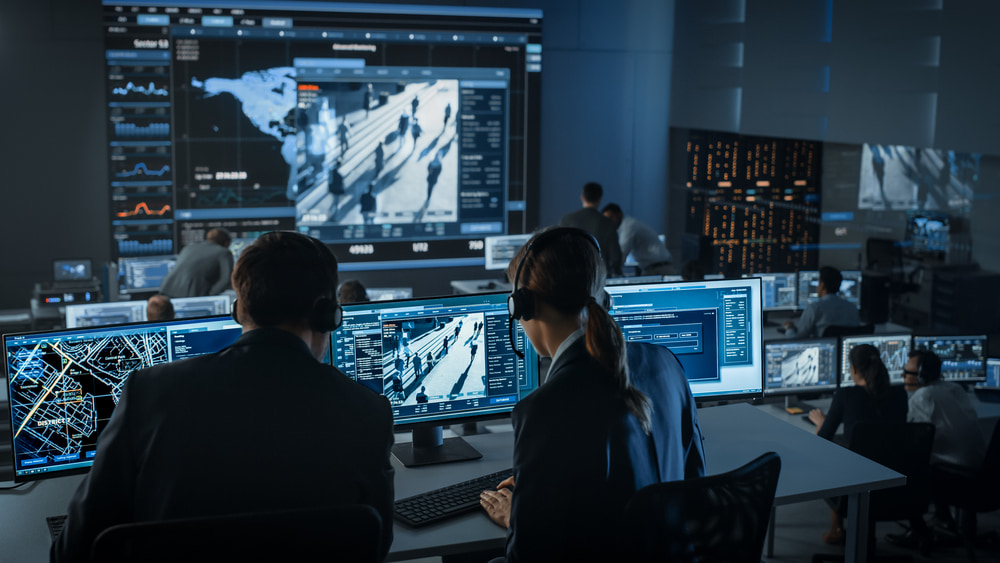
Video monitoring adds active human oversight to surveillance by having trained personnel review defined events and determine whether a response is necessary. The important word is active. As we discussed in our previous post on how modern video surveillance works, monitoring adds an active human component to CCTV systems.
A property may have cameras recording continuously without anyone actively responding to what those cameras capture. Monitoring introduces procedures for reviewing alerts, verifying activity, and taking the next appropriate step. It does not replace the cameras or recording platform. It adds an operational layer to the surveillance technology already in place.
With remote video monitoring, personnel can oversee camera activity without being physically stationed at the property. Depending on the setup and response plan, that may involve reviewing an alert, checking associated camera feeds, determining whether activity appears routine or suspicious, and following the site’s established escalation process.
What is the main difference between surveillance & monitoring?
The key difference is that surveillance captures and provides video, while monitoring adds active review and response. Think of surveillance as the visibility layer and monitoring as the action layer. Both can operate together, but they solve different problems.
A basic comparison looks like this:
- Surveillance captures activity: Cameras provide live views and create footage.
- Recording preserves information: Video can be stored in the cloud for later investigation.
- Monitoring reviews events: Personnel assess activity that requires attention.
- Response follows verification: The next step depends on the event and site procedures.
A property relying primarily on recorded surveillance may discover an incident after it occurs. That footage can still be extremely useful for investigations and documentation, but it does not automatically create an immediate response. Monitoring is designed to shorten that gap by bringing human review into the process when defined events occur.
Does someone watch surveillance cameras at all times?
No, a professionally monitored system does not necessarily require someone to watch every camera feed continuously. Modern systems can help focus attention on events that meet predefined conditions instead of expecting personnel to stare at dozens of screens waiting for something unusual to happen. Cameras, analytics, alarms, or other integrated security tools can generate alerts that direct attention to a specific location or event.
That makes the monitoring process more practical. Instead of treating every movement as equally important, the system can help identify activity that deserves review. For example, movement around a public entrance during operating hours may be normal. Activity in a restricted area after hours may carry a different level of concern. With remote video monitoring, trained personnel can review the relevant feed and use the property’s response procedures to determine what should happen next.
What happens when video monitoring detects an event?
When monitoring identifies a defined event, our trained personnel review the available video, verify what is happening, and follow the response process established for that property. Verification matters because not every alert represents a security incident. An employee arriving early, a maintenance contractor entering an approved area, or an object moving because of weather conditions can all create activity that looks unusual without actually requiring intervention.
Video provides context. Monitoring personnel can look at the relevant cameras and assess the event before determining the appropriate next step.
Depending on the site’s plan, the response could involve documenting the event, notifying a designated contact, checking another camera view, or escalating the situation according to established procedures.
Can video surveillance & monitoring work together?
Yes, surveillance and monitoring work especially well together because one provides visual information while the other creates a process for acting on it. For many properties, this combination offers more flexibility than choosing one approach alone. Cameras continue to capture activity, creating recorded surveillance that remains available for later review, while monitoring adds oversight for events that require timely attention.
A well-planned video surveillance installation can also connect surveillance with other security tools. An access control event, intrusion alarm, or intercom interaction may provide additional information that helps someone understand why an alert occurred.
That integration can reduce guesswork. Instead of receiving an isolated alarm with little context, authorized users or monitoring personnel may be able to see the associated activity and make a more informed decision.
When does professional video monitoring make sense?
Professional monitoring makes sense when a property needs more than footage and would benefit from active oversight of important security events. Not every site requires the same level of monitoring. A small office with limited after-hours activity may have very different needs from a multifamily property, warehouse, retail location, construction site, or building with multiple entrances and restricted areas.
Monitoring may be worth considering when you need:
- Faster awareness of after-hours activity
- Oversight when staff are not on site
- Verification before responding to certain alerts
- Better coverage of restricted or vulnerable areas
- A defined process for escalating security events
- Centralized oversight across multiple locations
We evaluate those needs before recommending how surveillance and monitoring should work together. The number of cameras alone does not determine whether a property is well protected.
Which company provides dependable video surveillance installation in NYC?
At ADR Security, we help property owners build surveillance and monitoring strategies around the way their sites actually operate, from busy commercial spaces near Astoria to multifamily buildings and larger facilities across New York. If you want to understand the benefits of professional surveillance for your property or the key factors that impact system planning, feel free to turn to our professionals for help.
If you are ready to compare recording, monitoring, alerts, and response options for your property, our team can assess your needs and recommend a setup that provides the right balance of visibility, oversight, and response. Let’s talk security today!


